two-way radio AI
Two-way radio AI through the audio jack: give your agent a seat on a channel that already works
Two-way radio AI without replacing a handset: tap the 3.5 mm and 2.5 mm jack inline, let the agent reply on the line, and hear what a channel sounds like.
August 14, 2026 9 min read
Radio estates outlive the projects that try to replace them. Sixty handsets, a repeater on the roof and a channel plan people learned years ago will not be swapped out so a language model can join in, and any proposal that starts there is already finished. Two-way radio AI becomes buildable the moment you stop trying to replace the fleet and start using the connector every handset in it already has. QuickComm publishes this guide from the hardware side of that idea.
Two-way radio AI means giving a voice agent both ears and a voice on an existing radio channel, by tapping the audio at a handset or console rather than by integrating with the radio protocol or replacing any equipment.
The short version
- The QuickComm Bridge Node is a $125 belt-clip dev kit that plugs into the 3.5 mm and 2.5 mm two-pin audio jack found on two-way radios, radio headsets, intercoms, PA systems, desk phones and control room consoles.
- The Bridge Node sits inline, so the operator's speaker mic or headset and the radio itself continue working as before.
- The unit is two-way, carrying both a microphone and a speaker, so audio from your text to speech returns down the same connection the question came up.
- Capture is 16 kHz mono PCM through a 24-bit codec, streamed over the loss-tolerant udp-v1 protocol to an endpoint you configure, which can be a LAN server.
- No transcription, translation or routing happens on the device, so speech to text, the model and text to speech all run in your own backend.
- Audio quality follows the line, and a transmission clipped before it reached the jack cannot be recovered by anything downstream.
Why integrate at the audio jack instead of the radio protocol?
Because the audio jack is the one part of a radio fleet that has stayed still. Integrating at protocol level means caring about the brand, the generation, the encryption scheme and whether a dealer will hand over documentation, and each of those is a negotiation before it is an engineering task.
By the time audio reaches the jack, the radio has already done the difficult work: received the transmission, decoded it and turned it into sound a person can hear. The 3.5 mm and 2.5 mm two-pin connector has carried speaker mics, earpieces and headsets for decades, which makes it the most durable interface in the building.
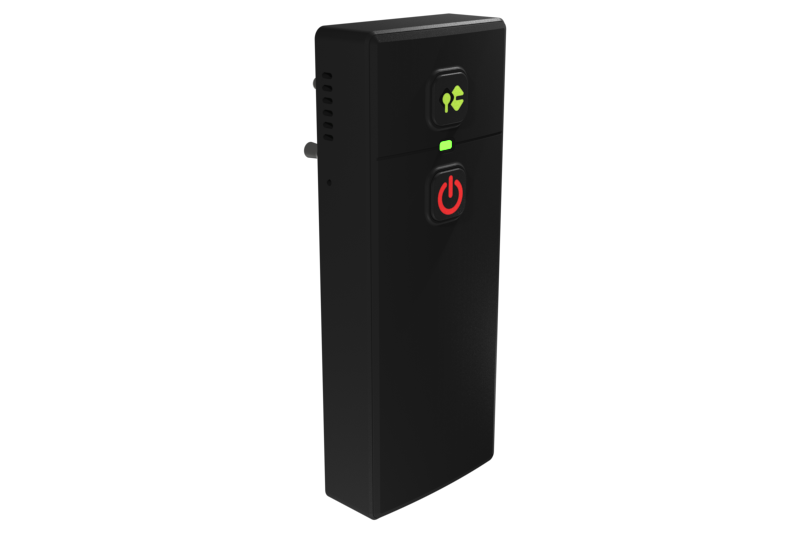
The QuickComm Bridge Node is a belt-clip dev kit built for exactly that point in the chain. The unit plugs into that connector, streams what it hears to an endpoint you configure, and takes no interest in what brand of radio sits on the other side of the plug.
Inline, so every handset stays in service
The Bridge Node sits inline rather than in place of anything. Operators keep their speaker mic or headset, the radio behaves the way it always has, and nobody is retrained on a new device to make your project possible.
That property is a smaller technical point than it is a political one. Asking people who depend on a radio to give up something that works is the fastest way to lose a deployment, whereas an audio jack bridge adds a listener without taking a handset away. Approval for a trial often turns on that single distinction.
A belief worth contradicting: radio integration is widely assumed to be a software procurement problem, solved by finding the vendor with the friendliest gateway product. On most real sites the constraint is not the API, it is the fleet nobody is allowed to disturb, and an inline tap is the only approach that leaves the fleet untouched.
Two-way means the agent answers on the same line
The Bridge Node carries both a microphone and a speaker, so the path runs in both directions. Channel audio travels up to your backend, and whatever your text to speech produces comes back down into the same connection, with no second device and no separate app in the loop.
How far that reply travels is worth settling on a bench before promising it on a live channel. Depending on the host device and how the connection is arranged, an answer may reach only the person holding that radio, or it may go out to everyone monitoring the channel. Those are two different products from the point of view of the people listening, and the difference comes from your wiring rather than from firmware.
What is a radio channel like as an audio source?
A radio channel is a strange and, in some respects, unusually generous input. Audio arrives pre-segmented, because push to talk discipline enforces one speaker at a time with a clear start and end to every transmission and near silence between them.
Compare that with a wearable microphone for AI, which hears its wearer, the person standing next to them, the room, and every stretch of time in which nobody meant to say anything. Turn taking that you would otherwise infer with code is handed to you by the medium, and speaker changes come with hard edges rather than fuzzy ones.
A radio channel is not only a microphone. A radio channel is a microphone plus a decades-old policy about who talks and when, and that policy is the part your recognition stack benefits from most.
The trade is quality. Audio follows the line, and the line is narrowband, compressed and shaped by whatever the transmitting handset was doing at the time: wind, engine noise, a mic held at the wrong angle, a marginal signal at the edge of coverage. A wearable sits centimetres from a mouth, while a channel delivers whatever survived the radio path, and no capture device downstream restores what the path removed.
Clipped transmissions are gone before the device sees them
The most common failure on a working channel is someone starting to speak before the transmitter has keyed up, so the first word or two never leaves the handset. Every listener hears the same truncated sentence, and your agent is one more listener on the channel.
QuickComm hardware does pre-roll buffering, which means speech entering the device's own microphone is never clipped at the start. Pre-roll protects the device's own capture and nothing before it, so a transmission cut short on the way to the jack arrives cut short. Any two-way radio AI design that assumes otherwise will look markedly worse in production than it did in testing.
The mitigations are human and prompt side. Brief operators to key first and speak second, and design the agent to ask for a repeat rather than guess at half an instruction, particularly where the instruction changes what a machine does.
Where should you attach the bridge?
Attach it where the channel is already terminated and the network is good. The radio network and the IP network are separate problems that meet inside the Bridge Node, and each is strong in the places the other is weak.
The radio side is why coverage exists in a quarry, a basement or a yard. The IP side is Wi-Fi 802.11 b/g/n on 2.4 GHz, or Bluetooth 5.2 for a local link, and it has to reach your endpoint. Clipping a unit to the person at the far end of the site fights that asymmetry, while placing it at a base station, a console, a dispatch desk or a control room lets the radio estate do the hard job of getting audio out of difficult places.
Everything above the wire stays with you. Speech to text, wake word, the model and text to speech run in your stack, whether that is a hosted API or a self-hosted voice AI setup entirely on your own machines. The endpoint is configurable from the QuickComm console, and once a device is configured it streams there directly without depending on the console to keep operating.
What this hardware does not do
- Nothing on the device performs recognition or inference. Voice activity detection is on-device, and every model call happens on your backend.
- Audio quality follows the source, so a poor transmission arrives as a poor recording and nothing on the device improves it.
- A transmission clipped before it reaches the jack is unrecoverable, whatever pre-roll buffering does for the device's own microphone.
- No ingress protection rating is claimed, and the 12-month warranty excludes physical damage.
- Wi-Fi is 802.11 b/g/n on 2.4 GHz only, and capture is 16 kHz mono PCM only.
- You own the backend, its uptime and the decision about which transmissions the agent should answer.
Two readers should skip this route. Anyone whose fleet is digital and whose vendor publishes a dispatch or gateway API they are permitted to use will get better quality and tidier operations from that documented path. Anyone issuing new hardware to people anyway will find a wearable simpler than a radio plus a bridge.
Common questions
Does two-way radio AI work with any brand of handset?
The Bridge Node connects at the 3.5 mm and 2.5 mm two-pin audio jack rather than at the radio protocol, so brand and generation matter far less than the connector does. Radios, radio headsets, intercoms, PA systems, desk phones and consoles that expose that jack are all in scope. Confirm the connector on a spare handset before ordering in quantity.
How does the agent know which transmissions to answer?
That decision lives entirely in your backend, because the device streams audio and makes no judgements about it. Most teams settle on an explicit address, a call sign or a trigger phrase, and treat everything else as context worth logging rather than something to reply to. An agent that answers every transmission gets unplugged within a day, so knowing when to stay quiet is the real design work.
Can channel audio stay entirely on our own network?
Yes. The stream endpoint is configurable from the QuickComm console and can be a server on your own LAN, and after configuration the device streams there directly without depending on the console. Whether the audio then goes anywhere else is a decision your backend makes, not one the hardware makes for you.
Is one Bridge Node enough to evaluate a channel?
One unit next to a spare handset answers the question that decides the whole project, which is how your recognition stack copes with your actual channel. Buy one before buying thirty, record real traffic, and run it through the exact engine you plan to deploy. Volume discounts start at five units and rise at 10, 25 and 50 once the answer comes back.
Getting one onto a bench
The Bridge Node is $125 and the product page carries the full hardware detail: belt clip, on-device display, USB-C, QR provisioning, and firmware already flashed so setup is three steps from the console rather than a toolchain. Units are built to order and ship worldwide in 10 days, with a 12-month warranty and 7-day returns.
As a voice AI dev kit it is the cheapest honest way to find out what your channel actually sounds like to a model. Two-way radio AI arguments are won with a recording rather than a spec sheet, and a single unit next to a working handset produces that recording in an afternoon.